Scheduling Strategies for School Construction Projects Around Academic Calendars
Strategically scheduling school construction projects around academic calendars helps owners deliver on time and minimize disruption to teaching, learning, and student safety. School construction projects require effective scheduling strategies that let construction teams complete critical work during limited work windows while maintaining safety, quality, and active learning on campus.
This article explores key scheduling strategies general contractors use for school construction projects. Before we get to that, let’s examine why school construction requires specialized scheduling.
Why School Construction Requires Specialized Scheduling
The school system operates under a fixed academic calendar, which means construction timelines and deadlines are set in stone. Construction is limited to summers, breaks, nights, or weekends, leaving little room for delays.
Schedules must be carefully planned, with careful consideration given to noisy work, heavy equipment, high-impact activities, and deliveries, while maintaining secure boundaries and safe access at all times. With many stakeholders involved, general timelines aren’t efficient. Only tailored scheduling protects student safety, minimizes disruption, and ensures schools open on time.
Key Scheduling Strategies General Contractors Use
Here are the key scheduling strategies general contractors can use for school construction:
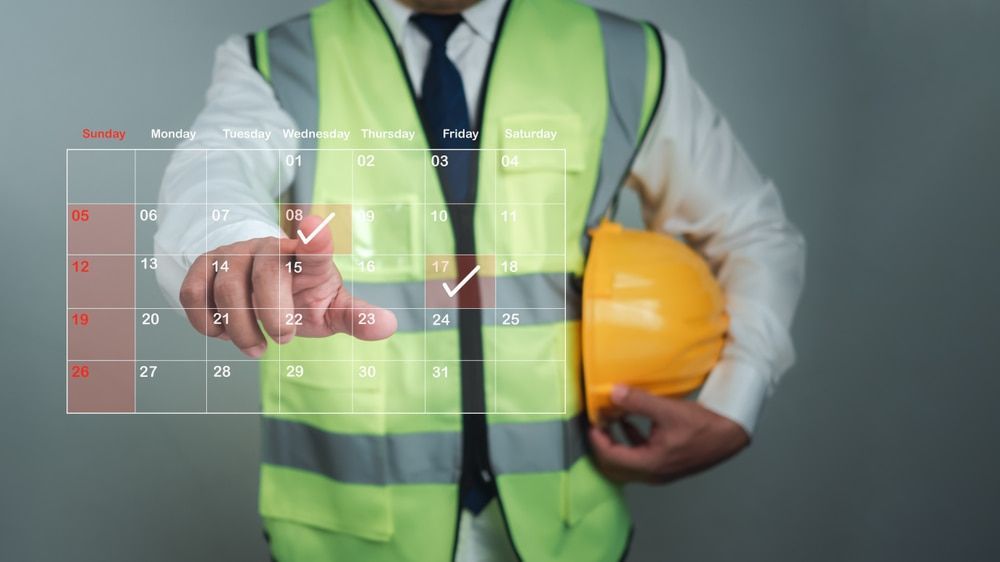
Plan Around the Academic Calendar
When the academic calendar is an afterthought, school construction can overlap with exams, key events, and everyday teaching, resulting in complaints, timetable disruptions, and safety concerns.
Mapping out the academic calendar helps contractors minimize disruption and maximize efficiency. It allows general contractors to pinpoint the perfect time when noisy, intrusive, or even high-impact tasks are acceptable on school grounds. These tasks are usually scheduled around holidays, weekends, and off-hours.
Phase-Out and Seasonal Scheduling Build
Without a well-structured scheduling plan, a school construction project is bound to disrupt classes, restrict the work timeframe, increase on-site hazards, and trigger costly delays. Implementing a phased and seasonal scheduling plan helps project owners mitigate these risks by breaking a school construction project into manageable, achievable phases.
Phased and seasonal scheduling allows parts of the school or campus to remain operational while construction work continues. This approach is commonly used when schools are occupied during the academic year.
Push High‑Impact Tasks into Holidays
When high-impact construction work is carried out while schools are operational, elevated noise, dust, and vibration can affect the health and well-being of students and staff. It can also disrupt concentration and lower learning performance. At the same time, active work zones increase safety risks from equipment, debris, and traffic interactions, requiring extra controls to prevent accidents involving students and staff.
Pushing major disruptive work, including demolition, tie-ins, flooring, and MEP shutdowns, into summer or extended breaks helps reduce disruption when campuses are unoccupied. Leveraging extended shifts and increasing staff during these work windows helps fast-track the completion of high-impact tasks before school resumes.
Adjust Day-to-Day Work Windows
High-impact school construction scheduling doesn’t have to be restricted to the holidays. Day-to-day workflow can be tailored to the school's timeline. General contractors can also schedule noisy or vibration-prone work for early mornings, late afternoons, evenings, or even weekends to protect students and academic staff.
However, contract requirements should specify what types of work are allowed at given times. For instance, drilling should only be outside exam windows. Deliveries are not ideal during students' arrival and dismissal. Choosing the right time of day for daily work reduces disruptions, protects concentration during learning, and still keeps the construction programme moving.
How Strong Scheduling Supports Safety, Quality, and Efficiency
A solid construction schedule is essential for a safe construction site, quality control, and efficient school construction projects. By clearly sequencing, defining dependencies, and using Critical Path Method (CPM), project contractors can set realistic durations, identify bottlenecks early, and plan high-risk activities so crews, equipment, and access routes are coordinated rather than competing for space. This reduces site congestion, safety incidents, and rework.
Well-structured schedules also improve efficiency by aligning labor, materials, and equipment to arrive exactly when needed. It also embeds quality and risk controls, including inspections, testing milestones, and contingency buffers. These checkpoints allow managers to monitor progress against plan, respond quickly to delays, and meet regulatory, safety, and
QA/QC requirements without rushed decisions that often compromise workmanship and long-term performance.
Partner with EDC for Confident School Construction Execution
Delivering school construction on time, on budget, without disrupting learning activities goes beyond guesswork. It requires strategic, calendar‑aware scheduling. Partnering with EDC gives project owners access to a team that understands how to phase work around the academic calendars of privately owned schools, push high‑impact activities into safe windows, and still maintain safety, quality, and productivity.
From preconstruction planning to the final handover, EDC coordinates stakeholders, refines schedules as conditions change, and tightly manages critical path activities so schools are ready for students on day one.
Ready to plan your next school project with scheduling that protects learning, safety, and your budget? Visit our
services page to see how EDC’s comprehensive general contracting services can support confident, calendar‑aware school construction execution.