Experiential Retail Trends in Commercial Construction
Experiential Retail Trends in Commercial Construction
Retail is evolving. Across national markets, experiential retail formats are reshaping how commercial spaces are designed, constructed, and delivered. Developers are prioritizing destinations that extend beyond transaction-based shopping and create environments where consumers gather, engage, and return.
Experiential retail construction requires coordination that accounts for entertainment integration, food and beverage infrastructure, adaptive reuse strategies, and long-term operational flexibility. It is not simply a design shift. It is a construction strategy shift.
The Modern Retail Format
The traditional retail box is giving way to multi-use environments that blend shopping, dining, entertainment, and service-oriented tenants.
These formats often include:
• Entertainment anchors
• Grocery integration
• Restaurant clusters
• Outdoor gathering areas
• Mixed-use components
• Enhanced pedestrian flow and community spaces
This shift influences construction sequencing, structural coordination, and infrastructure planning. Mechanical systems must accommodate varied tenant types. Utility distribution requires flexibility. Site logistics must support phased tenant openings and complex buildouts.
Experiential retail demands precision from preconstruction through closeout.
Adaptive Reuse and Experiential Conversion
Nationally, former department store footprints are being repositioned to support destination-oriented retail. At Pembroke Mall, a former Sears building was transformed into a multi-tenant experiential environment that now includes Fresh Market, DSW, REI, and Dave and Buster’s.
Conversions of this scale require structural evaluation, upgraded mechanical and electrical systems, façade reconfiguration, and careful coordination across varied tenant requirements. Grocery infrastructure differs significantly from entertainment assembly space. Outdoor recreation retail carries different load and display demands than traditional soft goods.
Adaptive reuse projects require disciplined preconstruction planning to align infrastructure upgrades with tenant specifications while protecting schedule and capital investment.
When sequenced correctly, these conversions extend asset life and reposition centers for long-term viability.
Mixed-Use Retail Environments
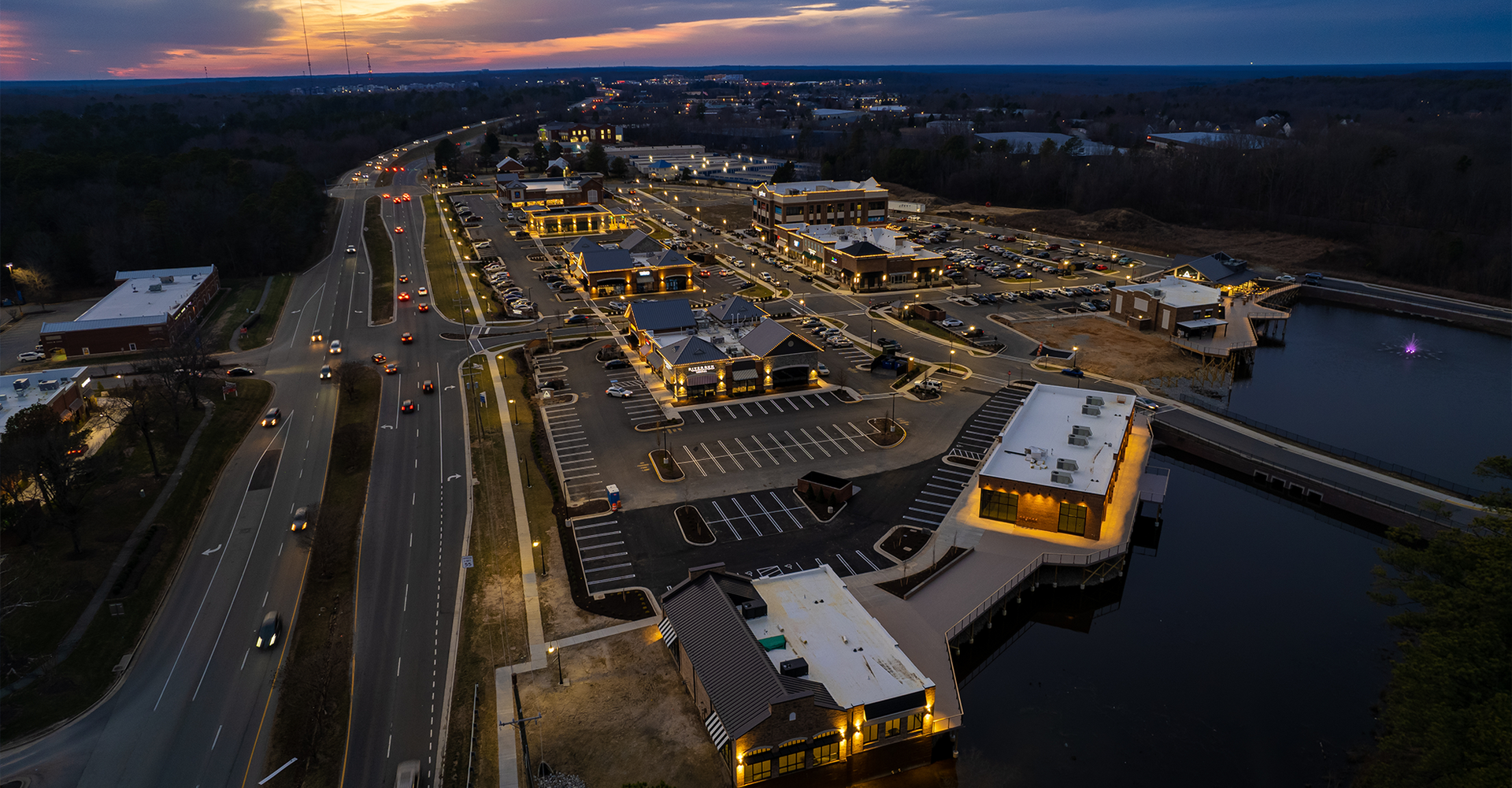
Mixed-use retail developments represent another evolution in experiential construction. Projects such as Winterfield Crossing, which integrates retail, restaurants, and office components, reflect the growing demand for layered environments.
Mixed-use construction introduces structural complexity, varied occupancy requirements, and phased delivery schedules. Retail storefronts, office buildouts, and restaurant infrastructure must be coordinated within a unified site strategy.
Early trade engagement, material lead-time evaluation, and infrastructure capacity analysis reduce downstream adjustments and support predictable outcomes.
Infrastructure and Operational Flexibility
Experiential retail construction must account for long-term tenant adaptability. Flexible utility routing, scalable infrastructure systems, and adaptable storefront configurations allow developers to respond to evolving tenant mixes without extensive structural modification.
This approach supports asset resilience. It protects capital investment by reducing future retrofit exposure and maintaining leasing flexibility.
Construction teams fluent in experiential retail formats recognize that infrastructure decisions made during preconstruction influence operational performance for years to come.
Building for Destination Value
Experiential retail reflects a broader shift toward destination-driven environments that encourage sustained engagement.
From a construction perspective, success depends on disciplined coordination, capital-aware planning, and careful sequencing. Adaptive reuse, entertainment integration, and mixed-use layering require structured execution to maintain schedule integrity and cost alignment.
Retail developers seeking to reposition assets or deliver new experiential environments benefit from partners who understand both evolving market formats and the construction realities behind them.
EDC continues to support retail and mixed-use projects with disciplined preconstruction planning, coordinated execution, and long-term performance alignment.