What Developers Should Know About Industrial Construction Projects
Industrial projects are built for the manufacturing, processing, storage, and distribution of commercial goods. As the developer, you are expected to make decisions that impact the successful delivery of industrial construction. With the right construction management team by your side, you can leverage the expertise and experience needed to deliver a successful industrial project. In this article, we’ll explore the key priorities developers should focus on during industrial construction and the common roadblocks that can arise along the way.
Understanding the Scope and Complexity of Industrial Construction
Industrial projects are built to support heavy equipment, high-capacity systems, and specialized processes. Distribution warehouses, manufacturing plants, and chemical processing sites are perfect examples of industrial constructions.
For industrial projects, each phase of construction depends on completing the previous one. The scope for the construction project comprises site selection, procurement, vendor selection, permits and regulatory approval, structural work, HVAC system installation, and inspection.
Industrial construction projects are usually subjected to strict regulatory standards that center on
safety, accessibility, and environmental impacts. It also requires specific building materials and consideration to support long-term use. Developers must also approach industrial projects with a scalable mindset. This makes the structures adaptable to business changes without operational disruption or costly renovations.
Factors Developers Must Prioritize for Successful Industrial Construction Delivery
Knowing what to prioritize in your industrial construction keeps project delivery timely and efficient, without costly setbacks. It’s also crucial for maintaining control over unexpected events, safety, quality, and schedules.
Below are some key factors developers should focus on for successful delivery:
Safety and Compliance
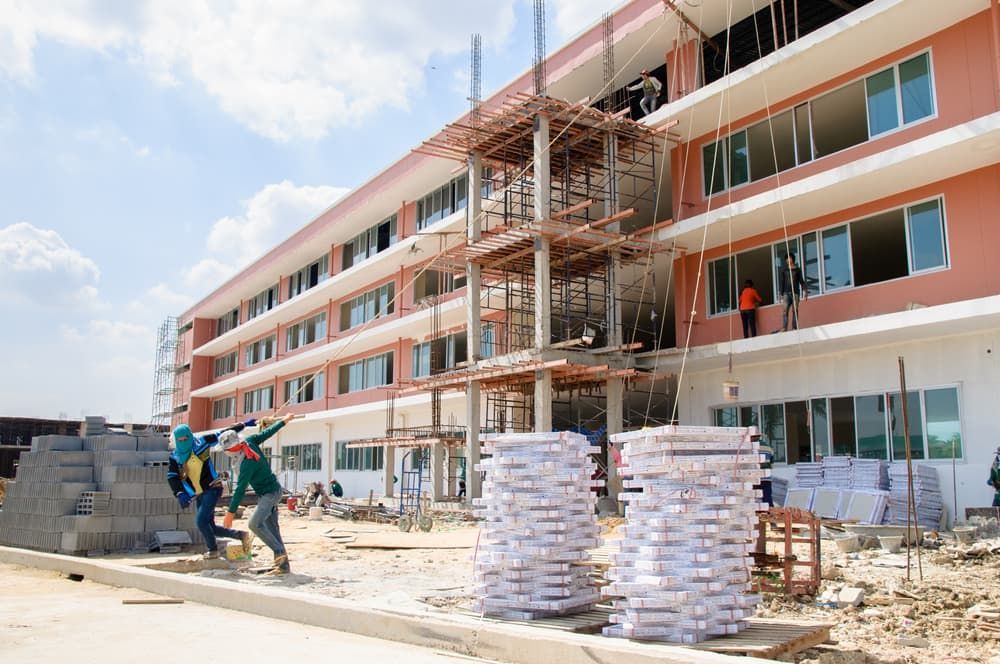
Industrial construction involves several high-risk tasks that require contractors to work in confined spaces, handle hazardous chemicals, and lift heavy equipment using cranes or forklifts. However, worksite oversight and noncompliance with safety measures can lead to fatal injuries, work stoppage, lawsuits, and financial liabilities.
In accordance with the
Occupational Safety and Health Administration (OSHA), providing the right equipment, such as ladders, scaffolds, safety boots, and face shields, helps keep construction workers safe. In addition, developers should prioritize workers' training in safety procedures, equipment setup, and the use of protective systems while on the job.
Implementing proactive safety measures, such as proper personal protective equipment (PPE) and proper classifications and labeling of hazardous chemicals in compliance with
OSHA’s Hazard Communication Standard Pictograms, also guarantees that every worker returns home safely at the end of the day.
Managing Logistics and Scheduling
Disruption in logistics and scheduling plans can lead to work stoppage, misallocated resources, cost overruns, and a setback in the project delivery timeline. For instance, delivering material late forces contractors to stop working, which drives up labor and equipment costs.
For efficient logistics and scheduling management, developers should map out material and equipment delivery timelines in advance and maintain clear, ongoing communication with suppliers and subcontractors.
Additionally, updated schedules and real-time progress tracking keep projects aligned, progress smoothly, and safely from one phase to the next. Building time buffers that anticipate unexpected changes also reduces unexpected delays and cost overruns.
Continuous Monitoring
When developers don’t track key performance indicators, bottlenecks go unnoticed, leading to delays, rework, and costly disruptions to the project timeline. Regularly monitoring project progress, performance, and risks helps project developers identify overlooked safety hazards, potential delays, and quality issues before they escalate into costly setbacks.
To avoid cost overruns and keep the project financially viable, developers must track actual expenses against the budget by reviewing invoices and approved payments, and forecasting future expenses.
Comparing actual progress with the intended timeline lets you anticipate potential delays early and take preemptive actions to stay on track. Other essential aspects of industrial construction projects that require constant monitoring are the scope of work, resource utilization, change orders, and construction document controls.
Quality Control
Minor installation errors from mechanical, electrical, plumbing, or even structural components can lead to equipment malfunction, safety hazards, and significant rework costs.
By prioritizing quality control, each component performs reliably throughout its lifecycle and exceeds the owner’s expectations. To maintain quality control, developers must also inspect and test construction materials, components, and workmanship to identify defects early and prevent costly rework.
Common Challenges in Industrial Construction & How to Overcome Them
Here are some common challenges in industrial construction and how to overcome them:
Unexpected Events
Every construction project runs into surprises. Unforeseen events like extreme weather conditions, equipment malfunctions, safety hazard incidents, material and labor shortages, could derail the construction timeline. Having contingency plans lets developers anticipate and mitigate the impact of these unexpected events on their projects. The contingency plan should outline potential risks, alternative solutions, and a budget allocation for unforeseen expenses.
Regulatory Standards Complexity
Regulatory compliance keeps construction activities in sync with required safety and quality standards. However, the US has varying local zoning requirements, building codes, and environmental regulations across states. Not only that, the International Code Council (ICC) updates building codes every 3 years.
Navigating the regulatory standards complexities can be a lot to handle alone. A trusted construction partner like
EDC helps you navigate regulatory standard compliance, such as the
International Building Codes (IBC),
Occupational Safety and Health Regulations (OSHA), and
National Fire Protection Association (NFPA) standards.
Poor Communication
Poor communication in industrial projects occurs when roles are vague, documents are outdated, and teams aren’t collaborating effectively. Consequently, this creates confusion, slows decision-making, and increases the risk of errors and delays throughout construction phases.
Establishing clear and open communication among stakeholders builds trust and speeds up decision-making plans. Developers should also maintain frequent updates and meetings that keep everyone in sync on project plans
Choosing the Right Construction Management Partner
Industrial constructions involve unique structures, strict regulations, and specific challenges. Choosing the construction with industrial projects expertise and a deep understanding of local building codes and safety standards is crucial for a successful delivery.
Many construction processes and stages in industrial projects might be overwhelming for developers. Partnering with an experienced construction partner that understands your vision keeps each phase of construction running smoothly. Not only that, the right construction firm creates contingency plans for unexpected events that might derail the intended project delivery timeline.
Build Well with EDC: Your Trusted Industrial Construction Partner
Collaborating with a construction firm like EDC prioritizes open communication among stakeholders, executes each construction stage with utmost precision, and anticipates roadblocks before they escalate.
Through warehouse facilities, distribution centers, laboratories, and more, our team brings experience, expertise, and teamwork needed to deliver a scalable, safe, and functioning industrial project that exceeds expectations.
Start your project on the right track.
Connect with EDC today to build high-performing industrial facilities built to last.